A classic samurai blade serves as a magnificent showcase of talent, but imagine you desire to communicate your individual character? Customizing your cutting tool is a deep journey, allowing you to construct a truly matchless piece. From the hilt wrapping and binding to the handpiece design and heat mark, each aspect offers a chance for specialized modification. This study delves into the territory of katana modifications, providing guidance for both learners and seasoned enthusiasts aiming to form their impression on the age-old art of the samurai.
Introductory Real Skill
For aspirants hoping to embark on the satisfying journey of martial arts involving swords , 1060 steel katanas supply an remarkable entry point. This specific grade of tool steel balances a fine equilibrium between affordability and functionality . While inferior to hard as leading steels, 1060 allows for a acceptable level of edge development , making it fitting for apprentices to enhance the fundamentals of katana upkeep and admire the allure of classic Japanese weaponry. It’s a remarkable choice for obtaining experience without the economical burden of more enhanced steels.
T10 Steel Katanas : Balancing Performance and Affordability
For hobbyists seeking an authentic sword experience without exceeding the budget , T10 alloy katanas represent a compelling option. These weapons offer a significant improvement in robustness compared to inferior alternatives, exhibiting satisfactory edge retention and tolerable flexibility for primary severing techniques. While not rivaling the outstanding characteristics of top-tier steels like T100 or folded metal , T10 provides a remarkable blend of power and budget-friendly nature , making them a sought-after choice for initiates and those on a tight budget .
Beyond the Sharpness : Adjusting Your Blade's Hardware and Hold
Considering the buffed steel is undeniably the essential point of a katana, truly boosting its grandeur lies in the deliberate customization of its details and hilt . This process allows owners to reveal their personal approach . Reflect on the vast possibilities: menuki - decorative embellishments that add visual charm ; the hamon encasements – often delicately chiseled; the tsuka core itself, wrapped in customary ito twine ; and the fusa terminal , which can be made from various ingredients like precious metals or shell .
- Opt for ideas that align with you.
- Evaluate with diverse composites .
- Focus on robustness for a long-term result .
The Love of the Katana: Antiquity, Formation, and Composition
A oriental cutlery shows a distinctive allure, steeped in eras of Japanese history and legacy . More than merely a artificial item of warfare , it's a icon of the soldier ethos – a fusion of skill and restraint . Its maturation spanned score generations, with early swords evolving into the polished curvature and precise edge we identify today. The manufacture involved is truly astounding , requiring ages of coaching to master . The process involves a involved folding of smelted iron , creating layers that fortify the instrument’s flexibility and severing ability. Diverse schools of crafting came about , each with their separate secrets and techniques for achieving the ultimate poise and acuteness - a truly grueling pursuit.
- Original Katana styles
- The task of the katana in warrior culture
- Ancient metalworking techniques
Picking the Perfect Steel for Your Cutting Tool Project: 1060 vs. T10
Picking the proper steel is fundamentally important for any armament project, and the option between 1060 and T10 can be complicated. 1060 is a favored American material, offering a acceptable balance of toughness and robustness, providing it fairly easy to temper. However, T10, a Japanese steel, generally boasts exceptional wear permanence and can probably achieve a superior decisive hardness, although it can be noticeably challenging to handle and requires accurate heat refinement. Consider your qualification and expected benefits: for a first-timer, 1060 may be a easier origin, while the expert smith might value the supplementary qualities of T10.
- Ease of Operating
- Erosion
- Conclusive Strength
Unleashing the Power: High-Level Katana Modification Methods
Becoming proficient in blade improvement extends far beyond basic grinding. Serious practitioners are now exploring advanced techniques to truly discover a blade's hidden potential. This entails intricate work with the heat signature, utilizing specialized ingredients for differential strengthening and carefully choosing the outline of the hilt guard to optimize balance and efficiency. Beyond purely functional enhancements, artisans are increasingly focused on reaching unparalleled aesthetic beauty, through complex cutting and layered surfaces that truly transform a katana into a artistic composition.
From Ordinary Steel to Fine Blade: Fabricating a 1060 Katana
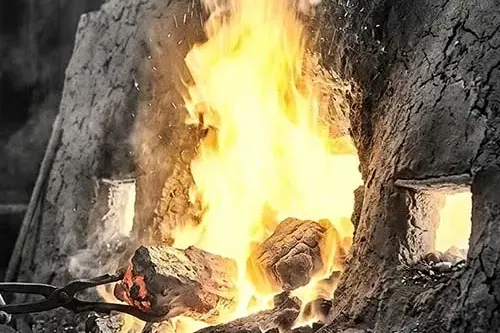
The journey originates with conventional 1060 alloy , a solid material far removed the fine katana it will evolve . Accomplished bladesmiths utilize a sophisticated process of layering and hammering the raw steel, repeatedly firing it and pressing it to extract impurities and establish a consistent grain structure. This t10 steel katana demanding process, often stretching for weeks , builds the crucial solidity and give characteristic of a legitimate Japanese tool. Subsequent heat adjustments , including careful hardening and quenching , are necessary to achieve the expected equilibrium of sharpness, endurance and loveliness .- Uniting: Removes impurities and produces grain structure.
- Fabricating: Fabricates the steel into the initial blade form.
- Tempering: Decides the final hardness and flexibility.
The Lasting Drawing of the Katana: An In-Depth Look at Metal and Personalization
This venerable katana holds present a intense symbol of Japanese heritage , its fascination far exceeding mere armaments . Forged from rare steel and habitually featuring intricate trims, the system of creation itself is a sacred art. Beyond the fundamental craftsmanship, the ability to customize a katana - from the temper line to the handle wrapping and guard - permits for a authentically individual representation for both devotees and handlers alike. This mixture of age-old steelwork and boundless personalization causes the katana's continued renown across the sphere .
