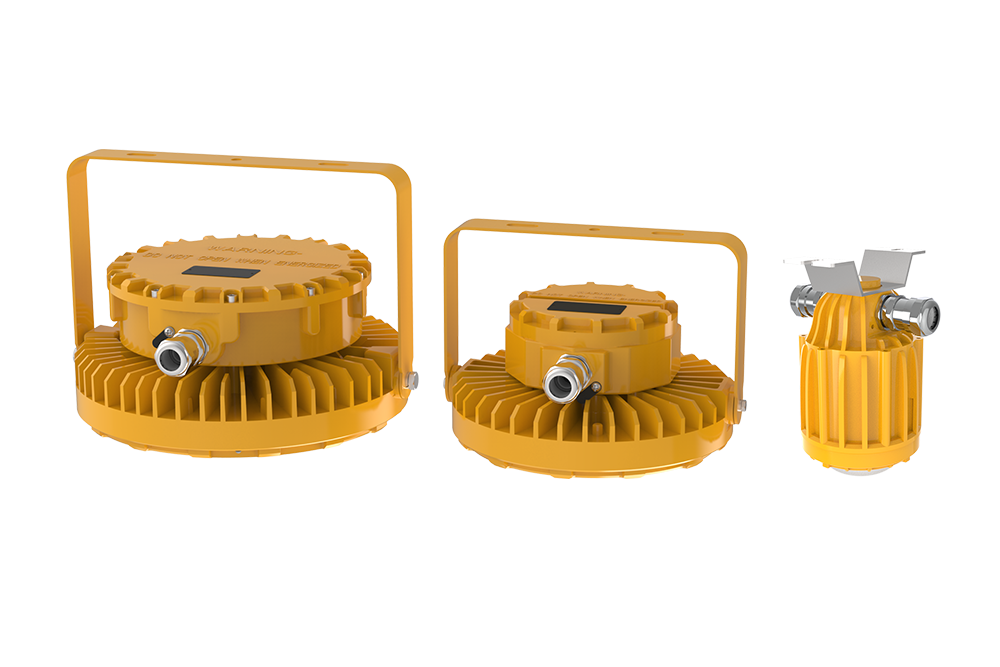
Launching aforementioned paper investigates several tools about spark-proof sources across commercial workspaces.
Running reliably in critical sites like processing sites demands select machinery in order to thwart imminent incidents. Flame-proof illumination units are critical aspects in these arenas, built to absorb discharges, flammable emissions, and explosive zones. Such machines are never inherently non-hazardous; rather they are engineered to enclose any interior arc or emission and avoid it from causing a expanded blast in the proximate environment. This summary discloses key insights about explosion-proof systems, their uses, and protection points for implementing them safely.
Interpreting Explosion Proof Lighting Standards
Managing specific flammability-rated lighting requirements can be complicated, especially inside workplaces operating in hazardous zones. These mandates – often based on international bodies among the National Electrical Council (NEC), ATEX (Europe), and IEC – enforce precise design and placement processes to limit the likelihood of ignition from lighting appliances. Understanding given standards is imperative for ensuring technician safety and compliance with regulatory duties.
Luminescent Ignition Resistant Emission Units: Quality & Guarding
Light Emitting Diode hazard-resistant illumination sources deliver a considerable boost over classic gas-discharge systems in sites where inflammable substances are available. These sturdy tools both supply superior fuel economy, yielding cut-down financial outlay, but notably promote a greater level of defense by halting the probability of combustion attributable to discharge discharge}.
Ex Perilous Setting Hazardous Proof Ignition Fire Light Resistant} Units : A Extensive Examination
Explosion Certified Perilous Setting Unsafe Proof} Luminaires are intentionally crafted lighting methods built to function safely within conceivably inflammable areas. These robust fixtures restrain sparks, thermal energy and static currents from initiating a severe explosion. They habitually incorporate advanced designs, featuring like impermeable housings and naturally safe power items to provide safety codes in businesses like oil & flammable gas processing, fabrication plants, earthworks operations, and biomedical production.
Appointing the Suitable Explosion-Proof Sources for Dangerous Environments
Identifying the perfect intrinsically safe sources for a specific regulated area demands in-depth consideration. Parameters such as the label (e.g., Category I, II, or III and domains 1) are required to be thoroughly determined to establish adherence with suitable defense codes. Additionally the area's typical menaces, consider atmospheric parameters, covering heat and precipitation, to pick a durable and protected resolution. Usually refer to a experienced advisor to direct your decision-making.
Places Where Are Found Explosion Proof Lights?
Explosion-proof commonly known as intrinsically safe|hazardous location|Class-rated} lights are strictly needed in various areas where ignitable emissions or residues could potentially create a hazardous atmosphere. This often includes processing treatment plants, sealant application areas, harvest handling facilities, and effluent management treatment sites. Regulations, such as those from NEC and IEC, require their use in these sites to reduce the risk of flames and protect security functionality.
Pros of Photon Emitting in Ignition Proof Sources
Upgrading to Photon Emitting technology for flammability rated units offers a important collection of pros. First, photon emitters boast a considerably longer service life compared to traditional vapor bulbs, reducing upkeep costs and idle times. They are also primarily safer, producing attenuated caloric output which lowers the possibility of sparking in hazardous atmospheres. What is more, crystal lights are progressively effective in power use, leading to reduced electricity outlays and a cut down green impact. Finally, the tough fabrication of Luminescent lighting systems withstanding the challenging circumstances typical of intrinsically safe areas.
- Augmented Usability Span
- Lower Handling Outlays
- Enhanced Precaution
- Minimized Energy Demand
- Augmented Durability
Controlling and Examining Explosion Proof Lighting Systems
Regular tuning and comprehensive checkup of flame proof lights blast-proof lighting systems are decisively crucial for confirming operational integrity and curbing potential risks. This covers a routine review of all segments, such as lighting devices, lines, conductors, and coupled terminal enclosures. Primarily, confirm for wear, structural compromise, and effective grounding. Besides, guarantee that each signs are legible and that the illumination sources conforms to relevant protocols.
- Complete surface inspections.
- Inspect conductive junctions.
- Confirm spark protection.
Prospective Developments of Explosion Proof Lighting Technology
Transforming landscape of explosion-proof systems technology predicts a substantial shift from traditional designs. Future approaches will steadily incorporate networked capabilities, enabling wide-area monitoring, diagnostics, and dynamic control. We foresee a increasing adoption of electroluminescent technology, not only for its basic energy efficiency, but also its competence to facilitate mounted sensors for detecting dangerous conditions. Additionally, materials analysis is propelling innovations in strong container materials, allowing for minimized and advanced designs, while continuing the obligatory levels of precaution.
- Elevated battery life for conveyable applications.
- Assimilation with precautionary maintenance schemes.
- Formation of automatic lens devices.